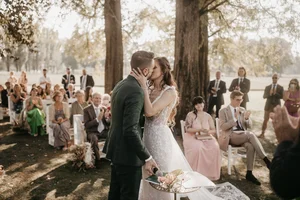
Italian wedding traditions your guests won't expect
There is a moment, during a wedding in Italy, when something shifts.
It's difficult to describe precisely. It's the moment guests stop watching and start feeling. When the beauty of the surroundings gives way to something older, more intimate something that has belonged to this country for centuries and still surfaces, today, in the simplest gestures of a wedding day.
Italian wedding traditions are not decoration. They are roots.
And for those arriving from abroad, experiencing them for the first time is often the part of the journey that stays longest.
The confetti — the first act of love
Before the celebration even begins, a small bag is placed in your hands.
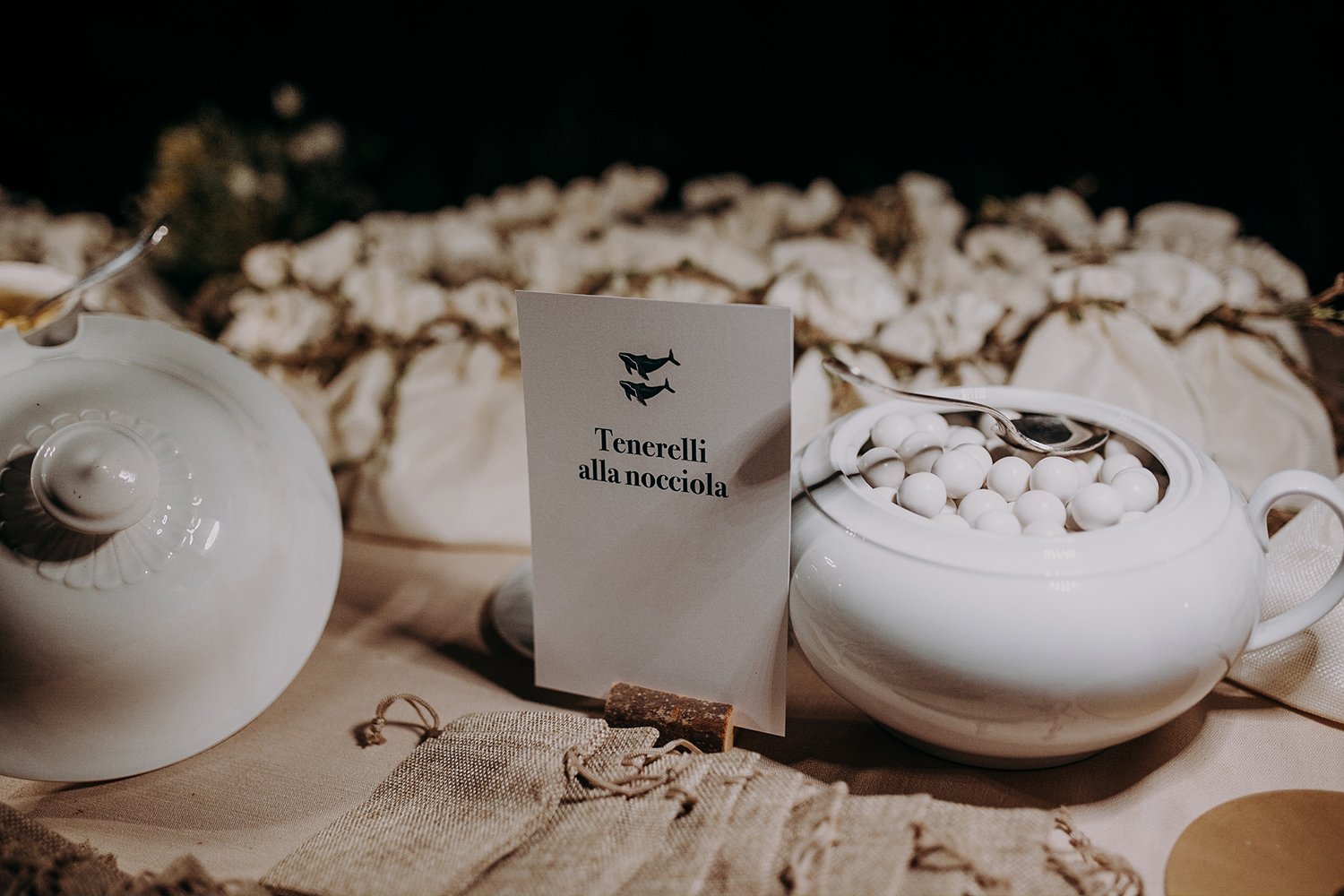
Five sugar-coated almonds, carefully packaged, tied with a thin ribbon. In Italy they're called confetti and they have nothing to do with the coloured paper scraps you might know from elsewhere. They are an ancient gift. Five, because an odd number cannot be divided, just as the bond between the couple cannot.
Those receiving them for the first time hold them with curiosity. Those who know them carry them home, keep them, talk about them. Because in that small gesture lies all of Italian generosity the care for detail, the desire for every guest to feel seen, welcomed, part of something.
The serenata — when love is sung under the stars
In the south of Italy in Puglia, in Sicily, in Campania there is still a tradition that resembles nothing you'll find anywhere else.
The evening before the wedding, the groom arrives beneath the bride's window. With him, musicians and friends. And he sings. He sings in front of a closed door, in front of the eyes of the whole street, in front of the darkness of the night.
It is an ancient and noisy moment, intimate and collective at the same time. Those who happen upon it by chance a guest unknowingly staying in the same village rarely forget it. Because in that serenata is everything Italian love knows how to be: passionate, theatrical, unashamed.
The rice and petals — the threshold that changes everything
The exit from the church or the venue, or the town hall has a particular sound in Italy.
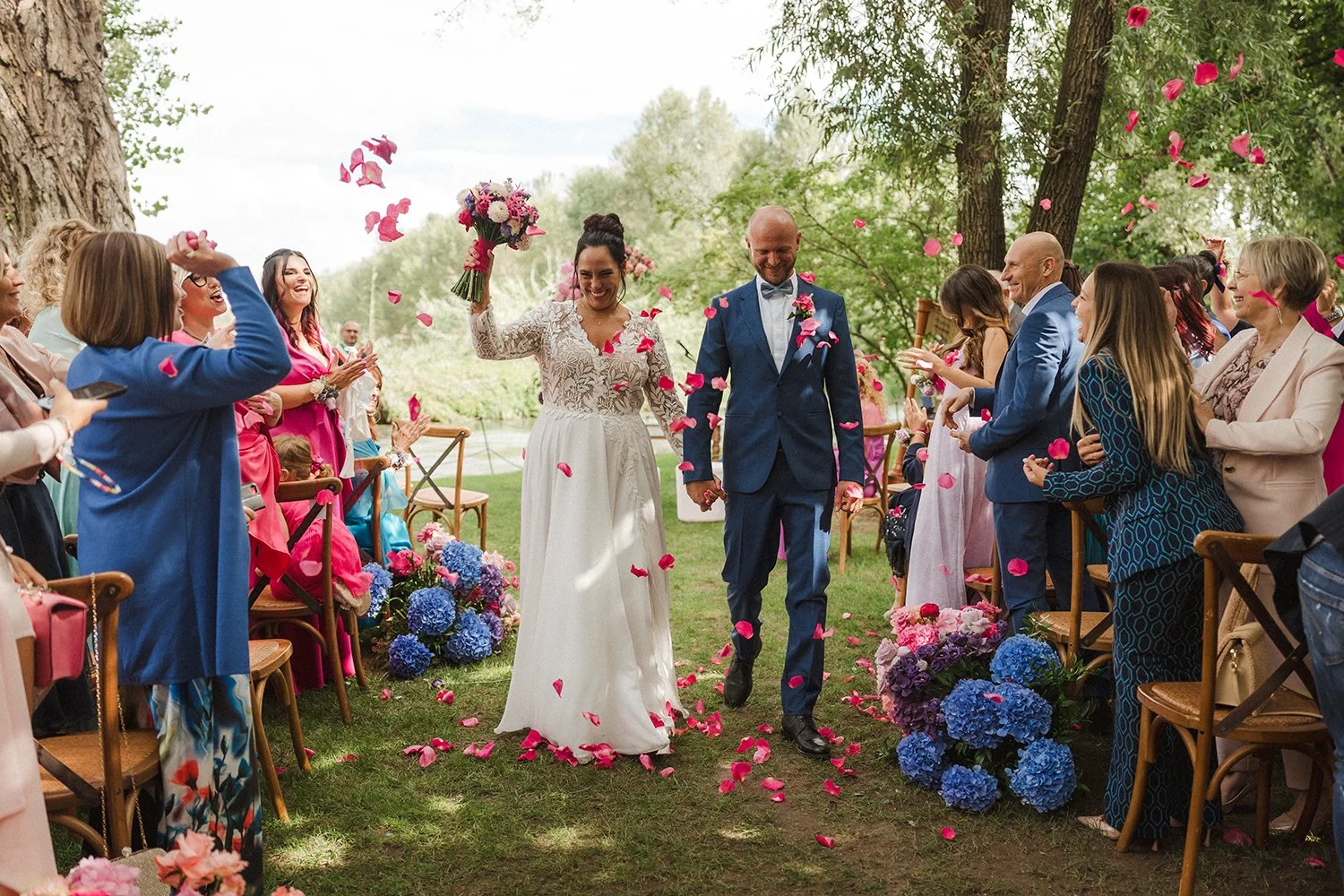
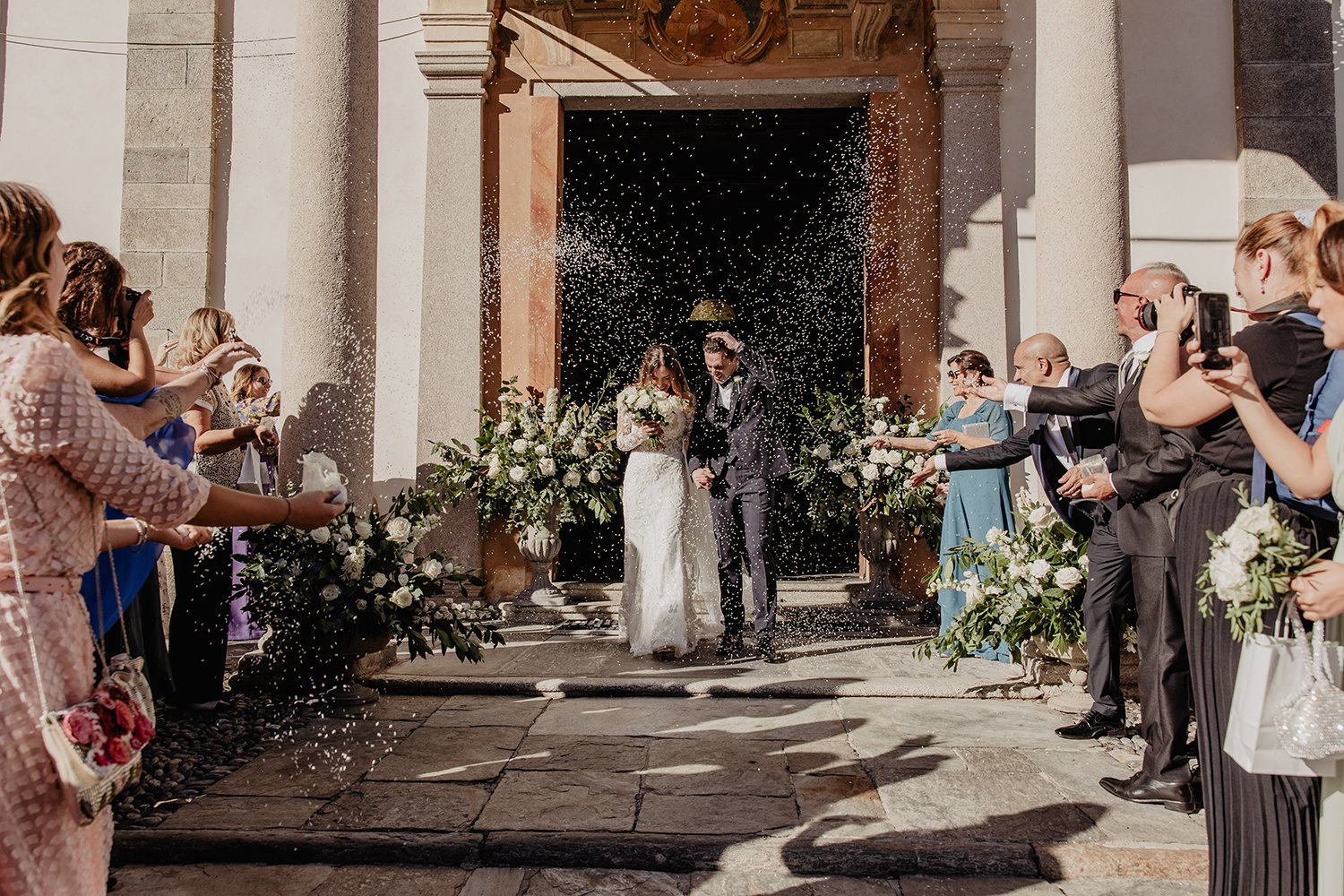
It is the sound of rice raining down from above, petals settling in hair, soap bubbles rising into the air. It is the sound of guests laughing, finding themselves suddenly part of something larger than themselves.
Rice brings fertility, tradition says. But what it truly brings, in that moment, is participation. Guests are no longer watching the wedding they are inside it. And that subtle line between spectator and protagonist is perhaps the most beautiful thing about a wedding in Italy.
The cake cutting — the moment that stops time
In many countries, the cake is cut almost quietly, distributed between tables while the party continues elsewhere.
In Italy, no.
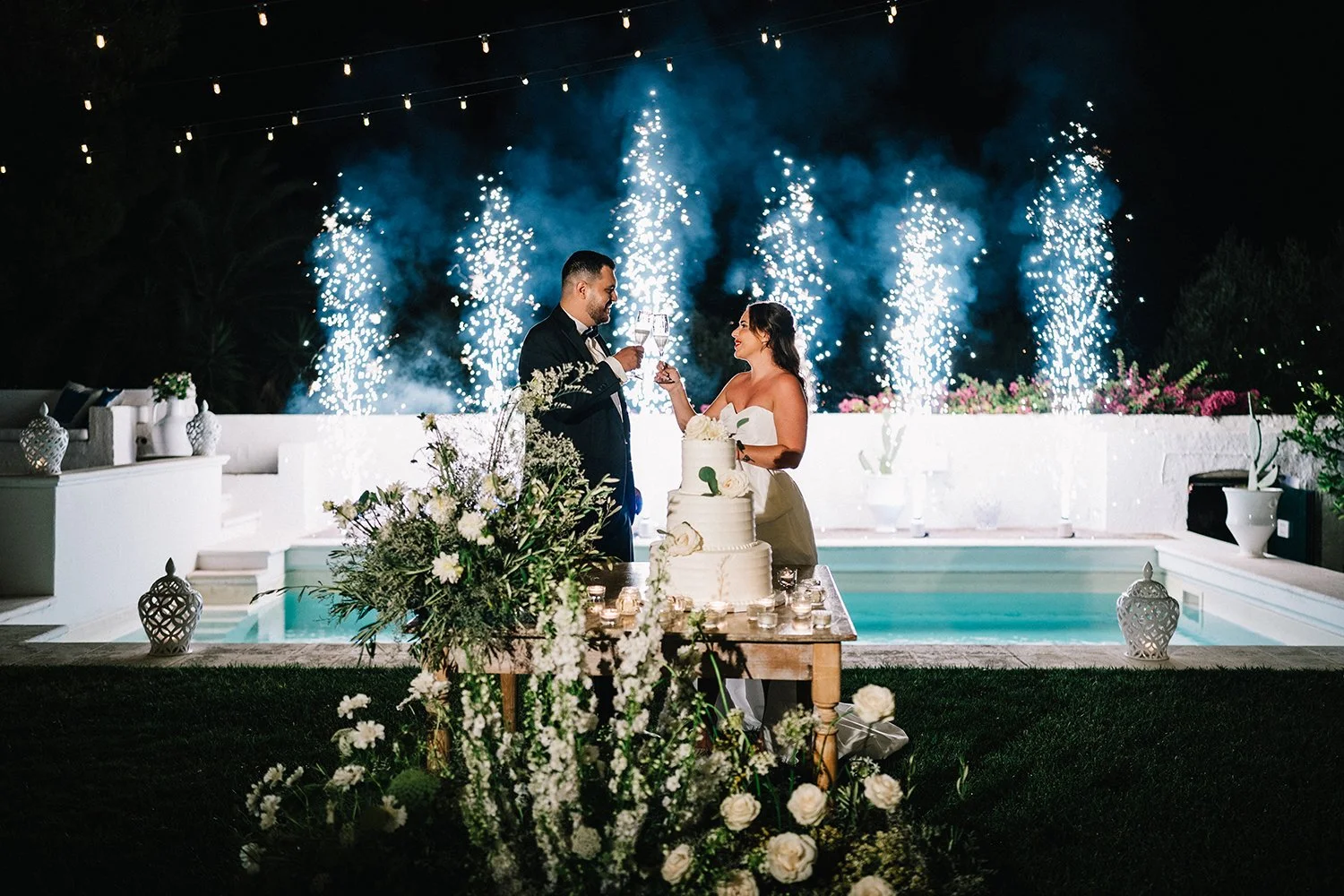
The cake cutting is an announcement. The music softens, guests gather, the light changes. There is anticipation in the air a collective expectation that turns a simple gesture into something almost ceremonial. And then, often, after the cake comes everything else: trays of pastries, a dessert station, the room transforming one final time before the longest part of the night.
For those who don't know this, the ritual can feel excessive. For those who live it, it becomes the moment they understand that an Italian wedding is in no hurry. It wants to last. It wants to be remembered.
The pace of the table — when food is a declaration of love
No guest from abroad is ever truly prepared for the timing of an Italian wedding at table.
The aperitivo lasts an hour, perhaps more. Dinner extends for three, four hours. Courses arrive slowly, toasts weave between speeches, music accompanies without ever drowning out the voices. It isn't slowness it's intention. Every moment at the table is designed to make people feel well, to create connections, to leave room for conversation.
And then, deep into the night, when you think it's over, the final surprise arrives.
Tarallucci e vino — the circle that closes
"Finire a tarallucci e vino" is an Italian expression meaning to end things in harmony. And at weddings, especially in the centre and south, it happens literally.
When it is two in the morning and the dance floor is still burning, the simple foods return: crunchy tarallucci, bread, cured meats, cheeses. A return to origins after hours of elegance and abundance. A gesture that says: we are still here, still together, and still hungry for food, for music, for this night.
This is the secret that foreign guests carry home, more than any other. Not the venue, not the flowers, not the cake.
But that strange and wonderful feeling of having eaten too much, danced too much, laughed too much and not wanting it to end.
These traditions are not accessories to a day. They are the day itself.
For international couples choosing Italy, knowing them in advance takes nothing away from the surprise — it allows you to experience them more fully, to share them with your guests, to make them part of the story you want to tell.
Are you planning a wedding in Italy with guests from more than one country?
Tell us your story.