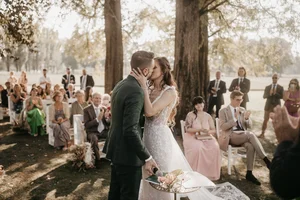
Are you ready to book? The pre-contract checklist

There is a moment, in every planning process, when a couple finds itself facing a concrete question.
Are we ready to sign?
It is not a trivial question. A contract with a venue or a supplier is a real commitment, with dates, figures and clauses that will have tangible consequences. Arriving at that moment with a clear head makes the difference between a process that runs smoothly and one that gets stuck halfway through.
Here is what it is useful to have defined before putting pen to paper.
The date is really the one
It sounds obvious, but it isn't.
Before locking in a date with a contract, make sure it truly works for you and for the people you want by your side. Are the most important guests available? Your parents, your witnesses, the people who simply cannot miss it? Are there local public holidays or events in the area that could cause traffic problems or limit hotel availability?
Once signed, changing a date almost always comes at a cost. Being certain of your choice from the outset avoids rushed decisions and difficult renegotiations.
The budget is defined and shared
Having a number in your head is not enough. The budget needs to be written down, broken into categories and shared with whoever is managing the planning.
Before signing with a venue, it is useful to know how much of the total budget it will absorb, what will remain for other suppliers and whether a contingency margin has been set aside. Because there are always unexpected costs.
Signing a contract without a clear picture of the resources available can lead, in the weeks that follow, to having to revise priorities and decisions that had already been made.
You have actually read the contract
Contracts with Italian venues can contain clauses that are not always obvious on a first read.
Cancellation conditions and related penalties. The obligation to use in-house catering or a closed list of suppliers. Time limits for amplified music. Setup and breakdown costs not included in the base price. Payment terms and final balance deadlines.
Reading the contract carefully and asking for clarification on anything that is not clear is a normal and necessary part of the process. Before signing, it is important to know exactly what you are agreeing to and what commitments you will be taking on.
You have seen the venue at least once
Photographs tell a partial story.
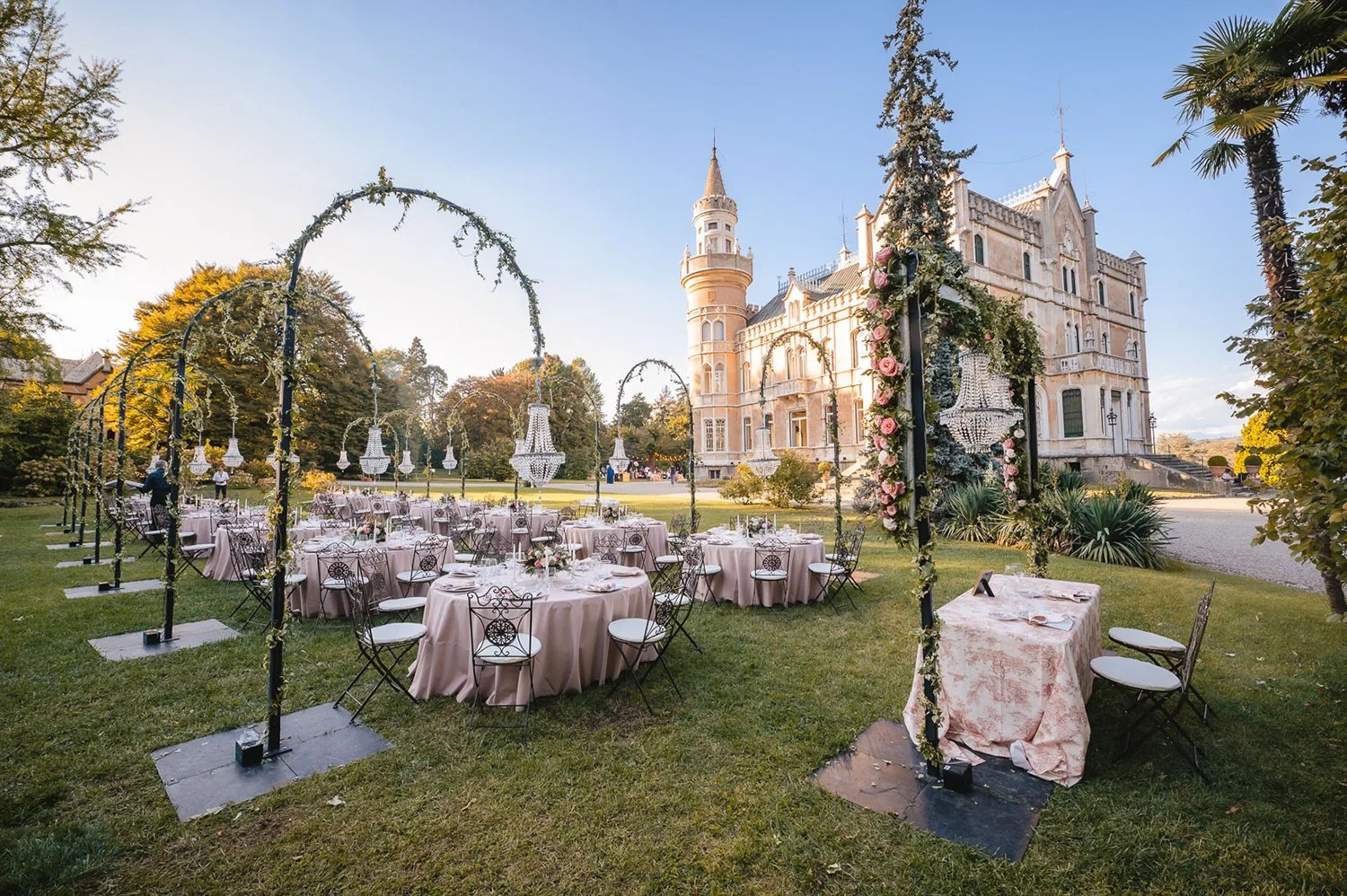
A venue needs to be experienced in person, at least once, before signing. Walking through the spaces tells you a great deal: the real proportions of the rooms, the quality of the light at the times that matter, the acoustics, the flow for guests, the distance from the kitchen to the reception area.
For couples based abroad, the visit can take place via video call, with footage prepared specifically for the purpose and precise questions about each space.
If it is a venue we already know, we can draw on experience built on the ground. If it is somewhere we have not yet worked, we consult with other wedding planners who know it well: in this field, there are relationships of mutual respect and collaboration that allow us to gather reliable, first-hand information before even organising a visit.
You know who your point of contact will be on the day
This is a question many couples forget to ask.
The person you have been planning everything with, building the project, choosing the details, may not be the one who will be present during the event. Some venues have a dedicated events team that works separately from the commercial team.
Asking who the operational contact will be on the day, and meeting them beforehand if possible, allows you to arrive at the wedding knowing who will be by your side and who to turn to for anything you need. A simple check that can prevent surprises at a moment when there is no longer room for improvisation.

You have a plan for your guests
Before signing with a venue, it is useful to have some idea of how the logistics for guests will work.
Where will they stay? Does the venue have rooms on site, or are there hotels nearby? How will they get there, especially those travelling from abroad? Which airport is most convenient, and how long does it take to reach?
Every detail does not need to be finalised before signing. But having answers to these questions already helps to confirm that the venue you have chosen is genuinely suited to the wedding you have in mind, not simply beautiful to look at.
You feel ready
This is the last item on the list, and the hardest to measure.
Signing a contract is a concrete act, and carrying unresolved doubts into that moment tends to complicate things in the weeks that follow. If there is something that does not quite convince you, an aspect you would like to understand better or a question that has not yet been answered, it is worth pausing before moving forward.
A good wedding planner knows how to recognise when it makes sense to wait a little longer, and when, on the other hand, everything is in place to proceed with confidence.
Being ready to book does not mean having all the answers. It means having asked the right questions and having resolved what you need in order to move forward with peace of mind.
Are you considering a venue and want to understand whether it is truly the right one for you?
Tell us your story.