What really happens in the month before the wedding
Arriving at one month to go with everything already confirmed is the result of a year of work.
The venue has been booked for months. Suppliers have been chosen, confirmed and briefed. The menu has been tasted and approved. The visual concept is defined. Guests know where to stay and how to get there.
The month before is not the moment when things get built. It is the moment when everything gets refined, monitored and brought to completion.
And it is, paradoxically, one of the most intense moments for those working behind the scenes, and one of the lightest for the couple, if everything has gone as it should.
The recap calls with suppliers
The first thing that happens in the final month is a round of calls with every supplier involved in the wedding.
It is not about redoing the work already done, but about aligning every detail. The photographer receives the final timeline and the list of essential moments. The caterer is updated on the exact number of guests and any last dietary changes. The florist receives confirmation of quantities and delivery times. The DJ or band knows the evening's programme and understands exactly when to play and when to stop.
Each of these exchanges seems small. Together, they build the certainty that on the wedding day, there will be nothing anyone does not know.
The stationery: the last detail to finalise
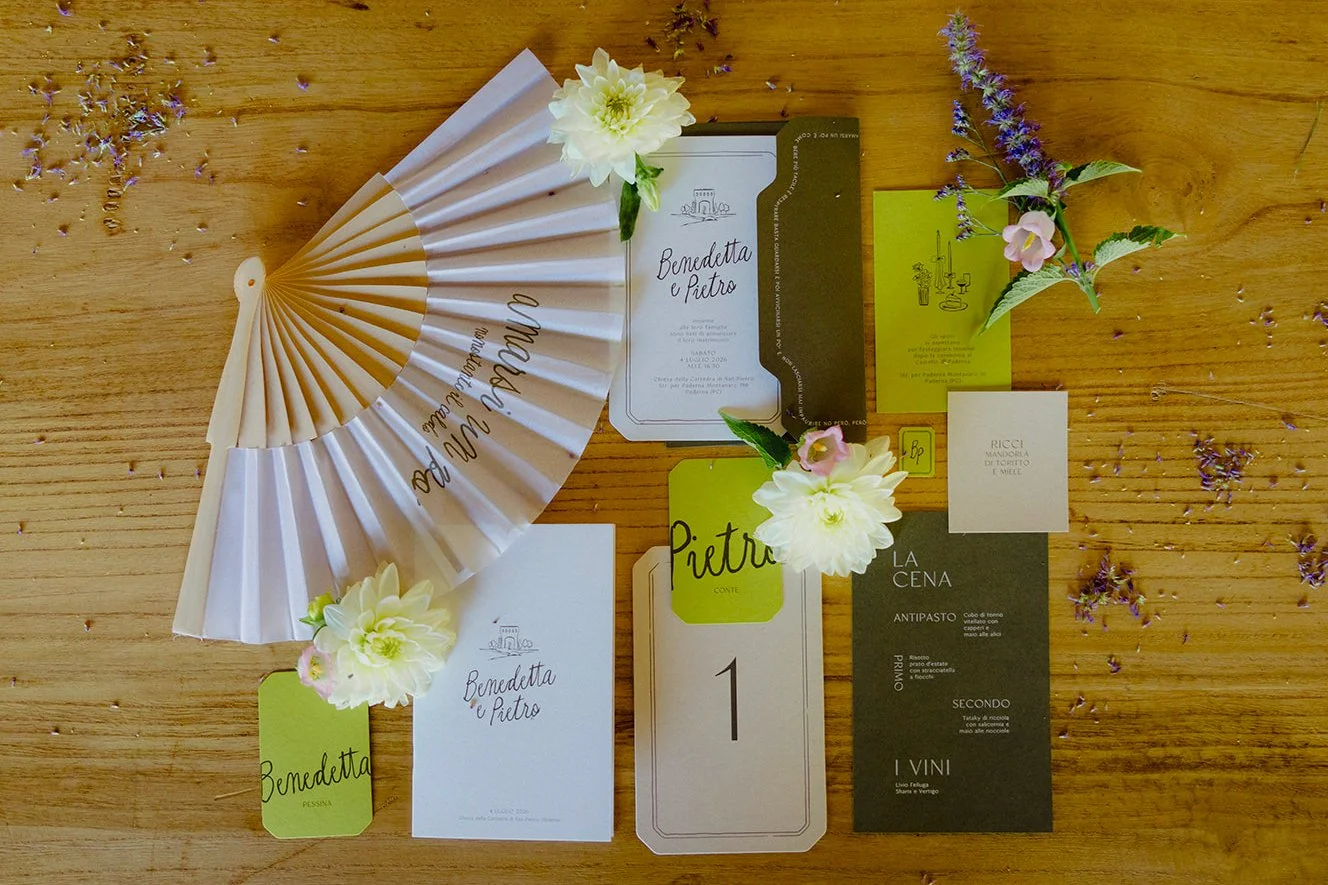
There is one item that almost always closes last: the stationery.
Printed menus, place cards, the seating plan, personalised favour labels, ceremony booklets. Everything that carries the couple's names and must be perfect, because it accompanies guests throughout the entire day.
In the final month, the last revisions are made. The final proof is approved. The printing is waited on. It is checked that the numbers are right, that names are spelled correctly, that colours match what was agreed. Then the delivery to the venue is arranged, in time for setup.
It is an apparently simple process that requires precise coordination, especially when printing timelines overlap with setup timelines.
The favours and guest details
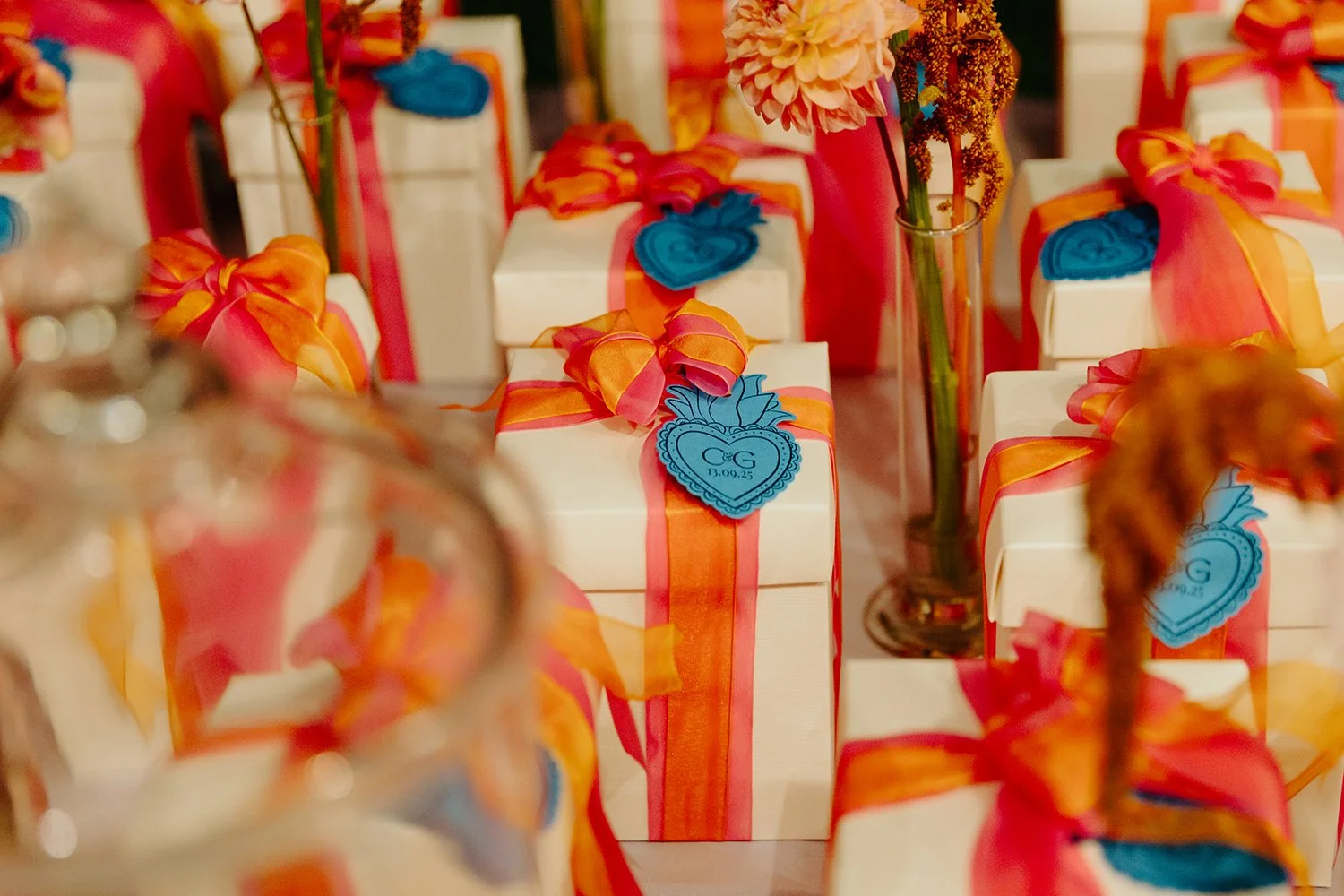
The final month is also when the guest gifts are finalised.
The favours, those small objects every guest takes home as a memento, are chosen, packaged and labelled. Sometimes they are something local: an artisan honey, a bottle of wine from the estate, a bag of confetti prepared by a local pastry shop. Sometimes they are something more personal, that tells something about the couple.
For weddings with international guests, this phase often includes preparing a welcome kit for arrival at the hotel: a map of the area, some suggestions on what to visit on free days, a handwritten note from the couple.
Small gestures that turn thoughtful hospitality into something truly memorable.
The operational timeline for the day
Among the last things produced is the most important document of all: the timeline for the wedding day.
It is not a programme for the guests. It is an operational document, precise to the minute, that every supplier knows and follows.
The florists' arrival. The start of hair and makeup. The moment the bride is ready. The welcome of guests. The service of each course. The start of the music and the moment it ends.
Building this timeline requires experience, because the timings of a real wedding are not what one imagines at the beginning. A complex floral installation takes more hours than expected. A bride with many guests to greet before the ceremony needs more time. A venue with a single access point requires a different transfer plan from one with multiple entrances.
This is the document the team carries on the wedding day. And the one that, when something does not go exactly as planned, allows course to be corrected without anyone noticing.
What the couple experiences, and what they do not see
In the final month, the couple begins to feel the wedding approaching differently.
Relatives arrive from far away. There are informal dinners, congratulatory messages, the last dress fittings. There is that particular feeling of suspension, of already being inside what is about to happen, while it has not happened yet.
What the couple does not see, during this time, is the work that continues. Confirmation emails going out. Calls being made. Small problems emerging and being resolved before they grow. The florist requesting a change to a delivery time. The transfer being recalculated because a flight has been modified. The venue updating the maximum capacity for the outdoor area.
All of this happens. But it happens elsewhere, and the couple does not need to know.
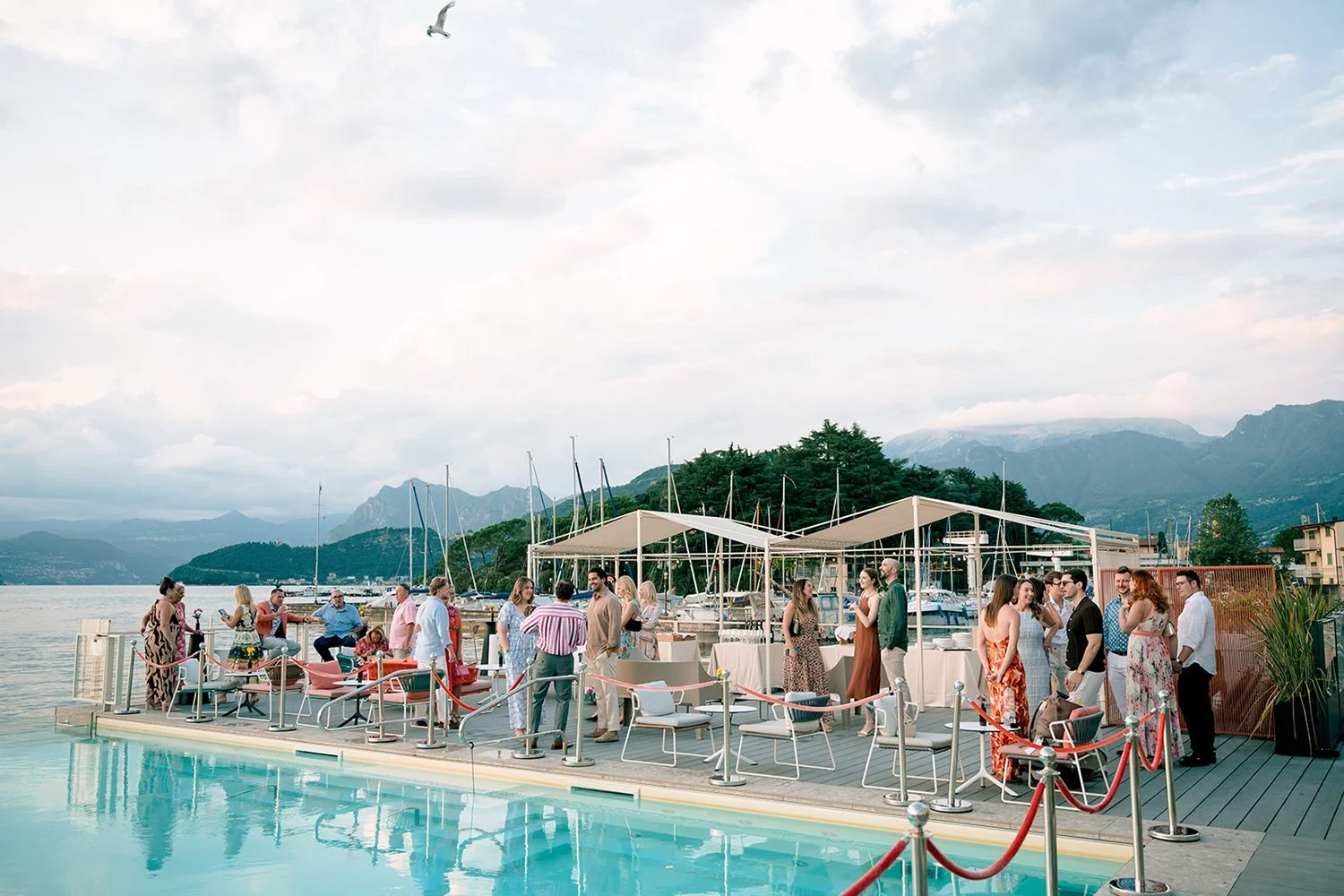
The evening before
The evening before the wedding, for those planning it, is usually the longest.
A final round of checks is made. The weather forecast is looked at one last time. The operational folder is prepared: every phone number, every plan B, every logistical detail. The envelopes with payments and tips to be handed to suppliers the following day are prepared. The cars are loaded.
For the couple, the evening before should be simple. Dinner with the people closest to them, a few hours of sleep, their minds already elsewhere. Because the next day there will be nothing to manage, only to live.
And that is exactly why the work happens all year long.
The final month is not the most creative part of the planning. It is the most honest.
It is the moment when you see whether the work done before was truly solid. And if it was done well, it is.
Are you starting to plan your wedding in Italy and want to understand how we work, from beginning to end?
Tell us your story.